
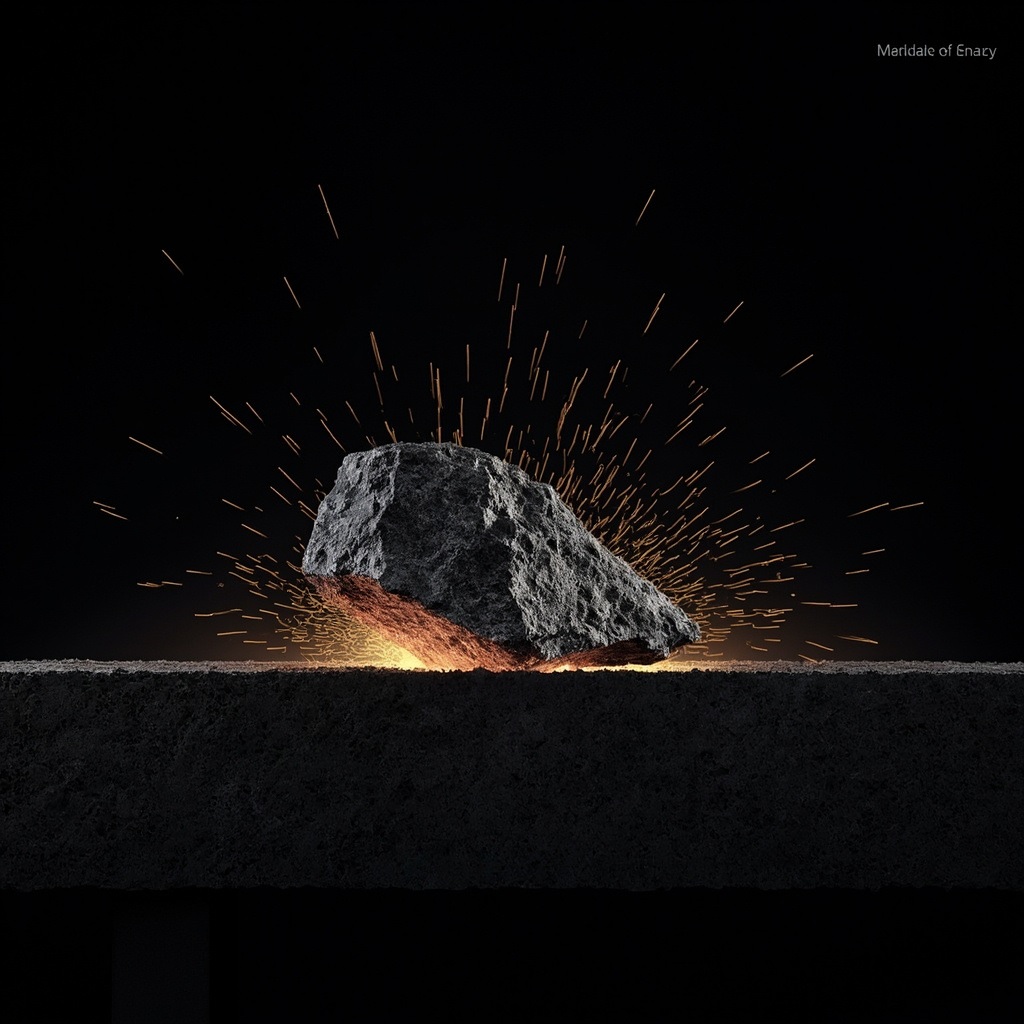
 Steelmakers have a dirty little secret. They spend a fortune removing carbon from molten iron, only to turn around and shove it back in. It sounds backwards, but it is the brutal reality of modern steel refining. The difference between a profitable heat and a costly headache often comes down to one thing: how fast and how efficiently that carbon dissolves. If your recarburizer is lazy, your cycle times balloon, your energy bills spike, and your final carbon specs start dancing all over the place. That is where High-Carbon Graphite stops being just a raw material and starts being a competitive weapon.
The physics are simple, but the execution is where most suppliers fall flat. Traditional carbon sources like petroleum coke or calcined anthracite have a nasty habit of floating on the surface of the bath. They sit there, burning off into the atmosphere or getting trapped in slag, while your operators stand around waiting for the chemistry to catch up. High-carbon graphite, specifically the kind with a fully graphitized crystalline structure, changes the game entirely. Its layered lattice allows for rapid wetting by the molten steel. Once that liquid metal grabs hold, the carbon doesn’t just sit there—it gets pulled into the bath with an almost aggressive hunger.
We have seen plants shave over 15 minutes off their tap-to-tap times just by switching from a standard recarburizer to a premium high-carbon graphite product. Fifteen minutes. That is not just a number on a spreadsheet. That is an extra heat per shift. That is lower refractory wear. That is less electrode consumption. And it all starts with the dissolution rate.
What makes the difference? Particle size distribution is the silent killer of efficiency. If your graphite is too coarse, it floats and burns. Too fine, and it gets sucked into the baghouse before it ever touches the steel. The sweet spot? A tight, engineered distribution that maximizes surface area without creating dust. Our process controls that with a precision that commodity suppliers simply cannot match. We are not dumping rocks into a crusher and calling it a day. We are tailoring the particle geometry to match the turbulence of your ladle or your furnace.
Then there is the purity game. Ash content is the enemy of speed. Every non-carbon impurity in your graphite acts like a shield, blocking the direct contact between carbon and steel. High-carbon graphite with 99.5% fixed carbon and ash levels below 0.5% dissolves like a knife through butter. Lower grades? They dissolve like a spoon through frozen molasses. You pay for that sluggishness in nitrogen pickup, in inclusion formation, and in the sheer frustration of missing your target on the first try.
Here is the kicker that most metallurgists overlook: thermal shock resistance. When you drop a piece of graphite into a 1600-degree Celsius bath, the internal stresses can shatter it before it even has a chance to dissolve. That creates fines that either float away or get trapped in the slag layer. Our graphite is processed to minimize micro-cracking, ensuring that every gram of carbon you pay for actually makes it into your steel. We call it “survivability.” Your yield numbers will call it a revelation.
Stop treating carbon addition as a commodity buy. It is a reaction engineering problem, and the solution is staring you in the face. High-carbon graphite is not the expensive option—it is the only option that actually pays for itself through speed, yield, and consistency. The next time you watch your operators stirring a ladle full of floating coke, ask yourself how many tons of steel you are leaving on the table. Then give us a call. We will show you what a real dissolution curve looks like.
